Starting Free Fire for the first time can feel challenging, especially when experienced players seem to know every weapon, map, and survival strategy. If you want to improve your skills and enjoy more matches, learning the basics is the best place to start. This Free Fire Beginner Guide 2026 explains essential gameplay tips, useful settings, weapon selection, landing strategies, and survival techniques to help new players build confidence.
Free Fire is a battle royale game where players compete to survive while the playable area becomes smaller. Winning requires more than accurate shooting. You also need good positioning, smart decisions, teamwork, and awareness of your surroundings.
Whether you play solo or with friends, these beginner-friendly tips can help you develop better habits and become a more confident player.
1. Understand the Basic Rules of Free Fire
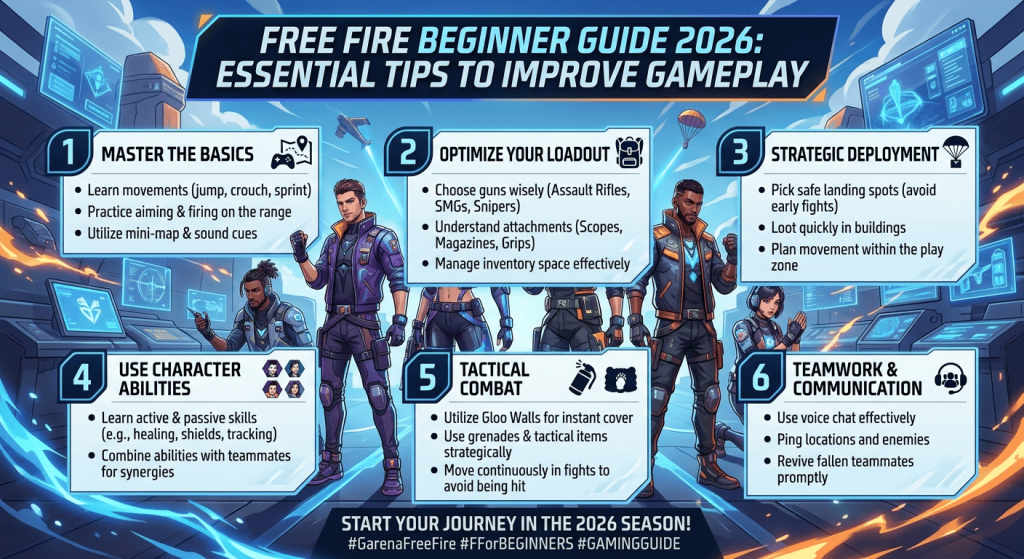
Before focusing on advanced tactics, learn how a typical match works. Players enter a map, collect equipment, find weapons, and fight to survive. As the safe zone shrinks, players must move strategically to avoid taking damage outside it.
Your main objectives are to:
- Land in a suitable location.
- Collect weapons, ammunition, and protective equipment.
- Stay inside the safe zone.
- Avoid unnecessary fights during the early game.
- Use cover when enemies are nearby.
- Survive until the end of the match.
Beginners often make the mistake of chasing every opponent they see. Instead, focus on staying alive and making sensible decisions. A well-planned movement can be more valuable than an early elimination.
2. Choose a Safe Landing Location
Your landing location can influence the entire match. Busy areas often contain valuable loot, but they also attract many players. Landing there without experience can result in an early elimination.
As a beginner, consider landing in a quieter area where you can collect equipment without immediately facing several opponents.
Follow these tips:
- Observe the flight path before choosing where to land.
- Avoid crowded locations until you become comfortable with combat.
- Look for buildings where weapons and supplies may be available.
- Learn the map gradually instead of memorizing everything at once.
- Keep an eye on nearby players while collecting loot.
Once you understand the game better, you can experiment with more competitive landing spots. For now, prioritize a safe start and enough equipment to defend yourself.
3. Learn the Best Weapon Types for Beginners
Different weapons suit different combat situations. Choosing a weapon that matches the distance between you and your opponent can improve your effectiveness.
| Weapon Type | Best Use | Beginner Tip |
|---|---|---|
| Assault rifles | Medium-range combat | Practise controlling recoil |
| Submachine guns | Close-range fights | Keep your aim on the target |
| Shotguns | Very close encounters | Learn when to move closer |
| Sniper rifles | Long-range engagements | Take time to aim carefully |
| Pistols | Early-game backup | Replace with a suitable weapon when possible |
You do not need to master every weapon immediately. Start with one or two weapon types and practise them regularly.
Also, collect ammunition that matches your weapons. Carrying ammunition for a weapon you are not using wastes valuable inventory space.
4. Adjust Your Controls and Sensitivity Settings
Comfortable controls make movement, aiming, and shooting easier. The best settings depend on your phone, screen size, and personal playing style.
Start with the default controls, then make small adjustments as you gain experience.
Improve Your Aim
Practise moving your crosshair toward the opponent before firing. Avoid making large, uncontrolled movements while aiming.
Customize the HUD
The heads-up display, or HUD, contains buttons for movement, firing, jumping, crouching, and other actions. Place important buttons where your fingers can reach them comfortably.
Test Sensitivity Gradually
Sensitivity controls how quickly your aim moves when you swipe the screen. Instead of copying random settings from another player, adjust one setting at a time and test it in practice.
If your aim frequently moves past the target, try lowering the relevant sensitivity. If turning feels too slow, a small increase may help.
5. Collect Essential Loot Without Wasting Time
Looting is important, but spending too long searching buildings can leave you exposed when the safe zone begins to shrink.
Focus on the equipment you actually need:
- A primary weapon and a suitable backup weapon.
- Ammunition for your chosen weapons.
- Protective equipment available in the match.
- Healing items.
- Useful grenades or other tactical supplies, when available.
Check your surroundings while looting. Listen for nearby footsteps and gunfire, and avoid standing in open doorways for too long.
As you gain experience, you will learn which items are most useful for your preferred playstyle.
6. Use Cover and Move Strategically
Standing in the open makes you an easier target. Buildings, walls, rocks, and other obstacles can provide protection when moving through dangerous areas.
Follow these practical strategies:
- Move between areas of cover instead of running in a straight line across open ground.
- Avoid staying in the same exposed position after firing.
- Check your surroundings before entering a building.
- Use the safe zone to plan your route.
- Avoid rushing into fights when you have little health or poor equipment.
Remember that cover does not make you completely safe. Opponents may approach from another direction or use tactical equipment to force you out of position.
Good movement helps you choose when to fight and when to retreat.
7. Learn When to Fight and When to Retreat
One of the most useful lessons in this Free Fire Beginner Guide 2026 is that not every fight is worth taking.
Before engaging an opponent, consider your health, ammunition, position, and available cover. If you have a weak weapon and your opponent has a clear advantage, moving away may be the smarter decision.
During combat:
- Aim before firing whenever possible.
- Use cover to reduce your exposure.
- Avoid reloading in the open if you can reach safety first.
- Change position when enemies discover your location.
- Heal when it is safe to do so.
If you play in a squad, communicate with teammates and avoid separating too far from the group. Supporting each other can make a significant difference during difficult encounters.
8. Improve Your Skills Through Regular Practice
You do not need to win every match to improve. Consistent practice helps you understand weapon behaviour, movement, aiming, and map layouts.
Try this simple routine:
- Spend a few minutes practising aiming and movement.
- Test your preferred weapons in available practice modes.
- Play regular matches to apply what you have learned.
- Identify one mistake after each match.
- Focus on correcting that mistake in your next game.
For example, if you frequently lose close-range fights, practise aiming while moving. If you often get caught outside the safe zone, pay more attention to the map.
Change only a few habits at a time so you can measure your progress.
Common Mistakes New Free Fire Players Should Avoid
Beginners often repeat mistakes that can be corrected with patience and practice.
Landing in crowded areas too early: Learn basic combat in less crowded locations before choosing high-risk landing spots.
Ignoring the safe zone: Check the map regularly and move early when necessary.
Firing without aiming properly: Take time to position your crosshair and learn the behaviour of your weapon.
Carrying unnecessary items: Keep your inventory focused on useful weapons, ammunition, and supplies.
Chasing every opponent: Avoid fights that offer little benefit or put you in a dangerous position.
Copying settings without testing them: Every player has different preferences, so use settings that feel comfortable on your device.
Correcting these habits gradually can make your gameplay more consistent.
Frequently Asked Questions
Is Free Fire suitable for beginners?
New players can learn Free Fire by starting with basic controls, practicing aiming, choosing safer landing locations, and gradually learning the maps and weapons.
Which weapon should beginners use?
Assault rifles and submachine guns can be useful starting choices because they cover common combat situations. The best option depends on your comfort and the weapon’s availability.
How can I improve my aim in Free Fire?
Practise regularly, adjust sensitivity gradually, learn recoil control, and keep your crosshair positioned where opponents are likely to appear.
Should beginners play solo or squad matches?
Both modes offer useful learning experiences. Solo matches encourage independent decisions, while squad matches help you learn teamwork and communication. Choose the mode that best suits your current skill level.
How can I make Free Fire run more smoothly?
Use graphics settings supported by your device, close unnecessary background applications, maintain a stable internet connection, and avoid overheating. You do not need unofficial booster apps to begin improving performance.
Conclusion
This Free Fire Beginner Guide 2026 provides a practical starting point for players who want to improve their gameplay. By choosing safer landing locations, learning suitable weapons, adjusting controls, collecting essential supplies, and using cover effectively, you can build a stronger foundation.
Remember that progress takes time. Focus on learning from each match instead of expecting immediate victories. Practise consistently, make smarter decisions, and gradually develop your own playing style.
For official announcements, game updates, and gameplay news, visit the official Garena Free Fire website. With patience and regular practice, beginners can become more confident and enjoy Free Fire even more.